There’s a poem, by a rhymer named Coleridge which is famous mostly because it came to him in a dream, the complete poem.
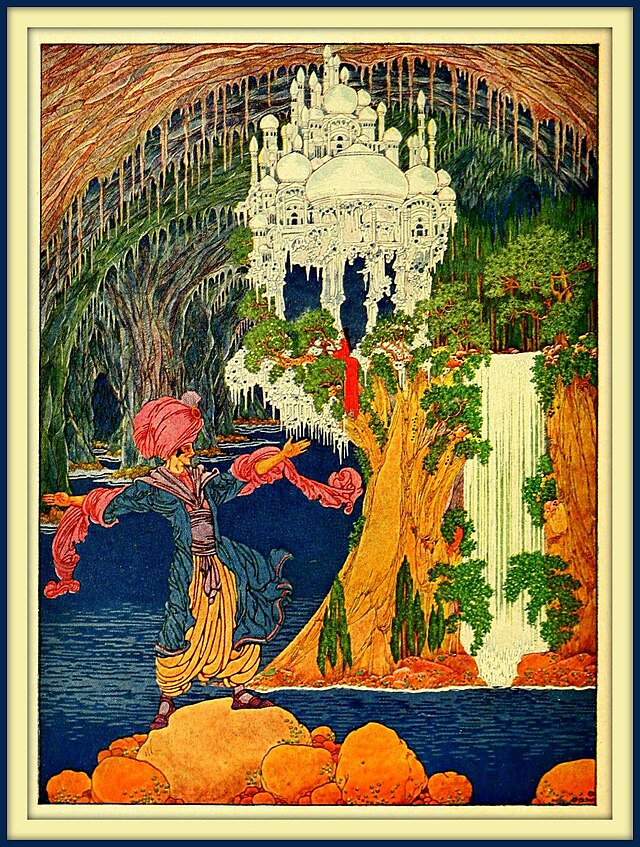
He woke up and wrote down about 3 dozen lines with some pretty vivid scenes – until he was interrupted by a visitor on business from a nearby town who lingered for an hour.
When Mr C got rid of him, he’d forgotten the rest of the poem.
It’s here if you are interested

MY DREAM, INTERRUPTED
Funny thing, something similar happened to me!
True story!
BACKGROUND
I’ve worked over the past 3 decades as an openly consumer worker in a variety of clinical services, and while it was rewarding sometimes, it was never comfortable. It always felt like I was a visitor in some other people’s country
Not the medical knowledge, or the skills and education. That was a given, expected and something I never expected to share.
It was everything else, all the stuff everyone took for granted – being able to switch off after hearing and seeing awful stuff, being able to count on sleeping through the night, every night, being pulled up, criticised and being able to let it ‘flow off you like water off a duck’s back’ being able to do an 8 hour shift without getting so exhausted you make mistakes and then get so angry at yourself you make more…
You know, everything that is so hard for us.
Basically everyone just seemed to like, work, or really live, so much more efficiently and easily than I ever could.
CONSUMER WAYS
I knew there were other people like me, and places and times when we could be ourselves and ways we organised things that worked for us – ‘consumer spaces’.
We do ‘check-ins’ when things start, and ‘I am just feeling cr@p today, I am going to sit here and just listen’ would be a perfectly acceptable position to take. We never have to apologise for feeling how we feel, and we negotiate ground-rules, agreements on what is a safe space today, what we can do today and what just has to wait till our heads are in the right place or we’ve handled another priority.
All stuff that an organised, efficient and regulated health service couldn’t abide.
So for a long time I thought I had to choose – working in a clinical setting and straining to meet a standard I couldn’t really, or being among my people, feeling valued and comfortable, but knowing there were so many of our people who didn’t have that comfort, that community and who were in the middle of that other clinical country and needed what we had.
A NEW DREAM
Then, I had the dream. I guess it was a dream or a daydream, maybe it was falling asleep reading the Royal Commission Report, or perhaps it was from a past life or a glitch in the Matrix?
Seemed to go on for quite some months, but that’s dreams for you I suppose.
I saw a way that people like me could exist, could work and thrive in that strange foreign world of neurotypical, skilled and – ‘normal’ – people that is a clinical service.
How I learned these things, I couldn’t really say – maybe someday I can, but not now.
INTERRUPTED BUT NOT FORGOTTEN
It’s gone now, too soon, interrupted.
But below I do my best to describe that new way, so others can maybe build upon it, and finish the task of making a space that adapts to us, in the place we most need it – in the middle of the services and hospitals where our people feel most alone and need our community and solidarity most.
So, I can’t tell you where or when I saw this, learned this – but it’s True.
A LLEW Way of Working?
These are some observations on integrating a large LLEW team into a public MHWS, from the viewpoint of one who has worked as LLEW in under traditional public health management.
The observations I make below, I only seek to apply to consumer LLEW as that is mostly where the last 30 years of my practice and contact with dozens of other consumer workers in a supporting role.
The observations on the experience of LLEW in clinical services below are based on extensive work in the field and a decade and a half of supporting and supervising ‘consumer workers’. The picture of the ‘New Way’ is from somewhere else I have been.
A BASELINE – PAST DECADES’ EXPERIENCE OF LLEW
To be fair, there are certain reasonably common elements of the consumer experience which can pose challenges for the smooth running of a traditional Mental Health Service. These are around the episodic nature of our ‘illnesses’ and the all too common and sometimes unpredictable traumatisation and triggering many of us experience at times.
- We may, as the sole LLEW in an organisation or in a unique role, take more frequent leave at times than non-LLEW workers, and ‘drop out and into’ the work periodically, leaving some work undone.
- We may run out of sick leave more quickly than others as we have the usual illnesses and accidents other have AND the results of having a psychosocial disability in a particularly stressful job in which having a disability is mandated by the employer.
- We may be seen to avoid certain activities or locales to maintain our recovery that are labelled ‘inherent requirements’ without reasons that make sense to non LLEW
- We may need to take time off with little notice, disrupting plans of the service.
All these things impact the organisation of course.
These things, while obviously not affecting every consumer, all the time, are still fairly common experiences among consumer workers/people with psychosocial disabilities.
The traditional solution, ‘define a role and performance manage anyone unable to do all the duties’ is what drove many of my peers out of AMHSs over decades and ensured the uninterrupted transmission of traditional culture and attitudes.
This could mean consumer workers bought into these perceptions, saw any challenges as their own failings, not as common experiences of people like us, or as failures of organisational support.
A consumer worker could, without any competing narrative, accept being judged and judging themselves against the standards and practice of people who did not share our values, challenges and vulnerabilities.
And that did not go well, externally or internally.
There are traditional management terms for most of these behaviours which impact on the work of the organisation– ‘absenteeism’, refusing to adhere to ‘inherent requirements’, ‘unreliability’ and measures traditionally used in response – basically performance management, requiring the ‘disabled person’ to be … ‘better’ or ‘more able’ because sick leave and absenteeism are KPIs that services require kept low.
THE NEW WAY
There is another way, a way that manages the downsides the organisation sees and also provides the organisation with the great benefit of the experience and empathy of LLEW that the Royal Commission demands.
There are significant organisational adaptations which can accommodate the real lives of consumers and carers and reduce the impact on the organisation.
These measure include –
- Consumer Leaders, at the highest levels and
- consumer team leaders who manage day to day activities and are not afraid to talk honestly about their own struggles
- adequate staffing so there is ‘redundancy’ in the workforce, if some are unavailable temporarily others are available, and sufficient numbers for mutual support and co-reflection
- a culture of ‘kindness’
- trusting LLEW when they describe their needs
- notionally numerous specific seniors for different roles (not usually all filled), a leadership that is more of a group then a hierarchy, so members often fill in for each other,
- encouraging an ethic of self reliance and independence among the experienced workers,
- modelling and insisting upon ‘first do no harm’ applying to us, not just our practice
- And a number of other deliberately innovative steps to address the core issue of accommodating the lives of people with disabilities. .
I will note, of course that some of the points above which support some of us are also points of pressure and strain for others of us; redundancy in roles and management is necessary, but ensuring that does not leave others shouldering unsustainable amounts of work is also necessary. In practice one would need to observe and tweak these, look for safe ways to get the flexibility.
As a veteran of trying to LLEW in public mental health services for decades, I want to say that I know now that some version of the structures and staffing described above and herein herein work, for some of us at least and deliver support and innovation I would have given my left arm for all those years before in other services.
WHY HAVE CONSUMERS AS LEADERS AND MANAGERS – WHY CAN’T THE SAME NEUROTYPICAL MANAGERS MANAGE EVERYONE – THAT’S FAIR, ISN’T IT?
There are many examples, some trivial, others serious, of occasions when treating consumers ‘just like everyone else’ is not egalitarian, but verging on indirect discrimination, practically if not legally.
It may be on occasion a challenge to get feedback from a consumer experience management sometimes, given the enormity of their tasks in building and integrating a LLEW, and sometimes from disability related absences; that is simply true.
However – and this is terribly unusual and significant – when an answer is really needed an answer, consumers in leadership, who share the same values and priorities, provide that answer, and moreover it is the right answer, the answer that acknowledges, accepts and honours the individual differences and vulnerabilities of people like us. It is also an answer that is consistent with LLEW training, IPS principles. The answer is practical and possible for us and does not assume years of training and skills and values we may not have.
WHY THE ANSWERS FROM NON LLEW SUPERVISORS DON’T WORK FOR US.
As an example, consider the task of supporting and correcting a recent graduate in clinical sciences who is found to be ‘blurring boundaries’ with consumers.
It is straightforward and draws on lessons taught in their extensive training and from modelling senior workers; just don’t do it – don’t share personal information, don’t step outside your specific clinical role, don’t take their side in any ‘splitting’ of the team. Easy – or at least clear.
It’s just not the same task when the worker is a LLEW worker, without that background and who is trained to form a mutual and equal relationship by deliberately identifying and sharing common experiences between themselves and consumers, to advocate for them with clinicians and whose basic tools, or ‘clinical speciality’ teaches them to deal with issues by deepening connection and mutuality, not avoiding it.
The methods for addressing boundary issues clinicians use won’t work for us, just like our methods won’t suit most clinicians.
(There is an IPS consistent approach to boundary issues, it’s just different from the clinical one.)
So when a non-LLEW supervisor tried to guide a LLEW worker, they, naturally, provide the guidance that has worked for themselves and everyone else they supervise but which is basically not consistent with LLEW values and training.
A CHOICE?
So if I have a choice?
100% availability from a nice, stable experienced neurotypical person who does not understand the consumer experience from the inside, or 25% availability from one of us, flawed, sometimes unavailable but who does know our experience, values and methods?
No contest – I would take the 25% all day any day.
Now if we can work out how to have the understanding AND increase availability, that would be great, and I would welcome it.
But even just implementing the incomplete model above would be a great contribution to the nationwide growth of LLEW and to our consumers/carers.
Q: IS INTEGRATING A LLEW INTO A SERVICE ALWAYS DISRUPTIVE, UNORTHODOX AND INEFFICIENT?
A: Only when you are doing it right.
- If orthodoxy could meet all consumer/carer needs, the Royal Commission would never have been needed.
- If Llew is not changing, disrupting, overcoming the momentum and routine of services, then we are making no change or improvement
- And building something new, discovering alternatives to processes and policies will ALWAYS be less short-term efficient and more experimental, more subject to reverses and adaptations than policies and processes developed and polished over decades.
We need to work within wider systems and policies, for many good reason s of safety and accountability, certainly.
However if we never challenge, never push boundaries, never demonstrate we’re different sort of workers with different ways of working and that there are other priorities than efficiency. then how are we going to demonstrate that LLEW can live up to the Commissions expectation of Culture Change. and ‘reforming Victoria’s mental health and wellbeing system?’
You don’t change or reform a culture by adopting wholesale and unquestioningly its methods and priorities; that’s adopting the dominant culture not challenging it.
What I love about us as LLEW is that we are brave enough to be who we are, to be ourselves and be different, testifying by our lives that there are different valid ways to be, that different is not always worse or pathology.
We need a cultural and administrative environment that allows and celebrates these differences, in or adjacent to traditional culture, for now. A ‘Third Space’, not outside the service or fully in it, a place LLEW can make for themselves.
That would be real culture change, when we, ‘mental health and wellbeing workers’, colleagues of clinicians are not hiding who we are, not afraid to say when we’re not at our best or to call out some language or practice that offends – all the things we’ve had to hide in past decades to be ‘professional.’
That is what will start our clinical colleagues thinking about different ways they could relate to their clients.
And, trust me, that can ONLY happen within a LLEW/consumer led, LLEW/consumer ethos team which supports each other, which does not ask ‘what’s your diagnosis/what’s wrong with you?’ but ‘what do you need?’ and trusts the answer!
‘BUT IT’S SO HARD TO FIND CONSUMERS WHO CAN COPE WITH THE PRESSURES AND WORKLOAD WE EXPECT FROM MANAGERS’
I’ve worked in disability rights for decades, physical, sensory and psychosocial.
There’s a school of thought, which always p*ssed me off, that integrating people with psychosocial or other disabilities is a process of finding the ‘most able disabled people.’
One board member of a physical disability group in the ’90s enraged a roomfull of people at an AGM by quite seriously explaining that he certainly saw the day when the board of governance might include some people with disabilities who used their services – when the current generation were dead and the young people now who got early intervention became adults.
Or almost as bad are the thankfully rare nowadays services who employ people with disabilities, the *gasp* with surprise when it turns out the new employees, who are people with disabilities are, less ‘able’ in some metrics, do some things less efficiently. *Shock! Horror!* Then they performance manage them out of the role and seek a ‘more able disabled person’.
That’s one way.
It’s not the way to get the best out of consumer LLEW, of course.
When we’ve chosen the people who have the life and work experience to do the job, EXECUTIVE, MANAGER AND THE REST, and allowed them the time and authority to manage their disabilities as they need, TO BUILD A STRUCTURE THAT CONSUMERS CAN LIVE UNDER, we get the trasnsformative results the Commission requires.
There’s a better way, a more modern, more productive way, that would be applied to different sorts of disabilities – for all of us, ‘identify the impairment, the things it’s harder for us to do, see where that impairment impacts on the job or organisation, then put in place the adaptation, to the environment or organisation that reduces that impact.’ That can be adaptive equipment in some cases, or redesign of roles, or even increasing EFT.
The way described above, though it needs to be adapted to specific circumstances and teams, allows for something wonderful.
By innovation, trial and error and honest communication, can be developed supports and structures that address and accommodate consumers at ALL levels of management, the widest range of people with disabilities and their carers that can be generalised and applied in other services.
Supporting the majority, not the elite.
When the balance and new supports are right, there will be a model of which those who pioneer it can be justly proud, and can offer to LLEW Australiawide – and beyond.
A MARVELLOUS DREAM OF THE FUTURE
That’s what I see as the marvellous, transformative, glorious and necessary potential of LLEW
Because if you can develop those structures, then you can meet the needs of all of us AND can reap all the benefits that come from our lived experience; you get -
- a management team who actively supports and encourages a worker who quit over a period of TEN MONTHS until they are able to return to work
- Management who fights for preferred candidates who others might reject as too complicated .
- Management who model and encourage honest and realistic talk about their and their team’s real level of coping .
- Management who model values and work practices which don’t make a consumer ashamed to be who they are, and have the limitations they have.
- A team that can adopt and really mean the motto, ‘Be kind to each other’ (The rest of the quote from Ephesians is more stark but also relevant)
We need for our leaders to be allowed to be different, can say for instance ‘I won’t be reading emails today; my head’s just not there’. The difference is that it is SAID, I suspect the DECISION is not as uncommon as some might think.
And it gives the rest of staff the right to be different, to stop hiding and be ourselves; different but not less.
Yes, we – staff, managers and directors, as people with disabilities are less ‘able’ by some metrics than people without disabilities, do some things less efficiently.
Big surprise!
But in the context of the Royal Commissions requirement for culture change, the things we can do better than non LLEW need to be added to the balance also, and they are myriad – and made the Commission idetify LLEW as a crucial path to better services.
MORE WORK IS NEEDED
Obviously as we turn this dream into reality (again? It seems that way somehow) we will get some things wrong. We will learn what works by trying things that don’t or at least don’t work well enough..
In any real innovation there will be unforssen consequences, particularly when specific function have not had sufficient redundancy and support, so inappropriate levels of demand might fall upon individual team members, and the initial iterations of team structure will probably need adjustment.
That needs to be monitored, addressed and those consequences prevented.
If that happens during the attempt to build a team of real people living with disabilities it will not have been a ‘mistake’, but part of a process of discovery. But given all the benefits above, we need to be careful what conclusions we draw and what direction we aim change – further along the innovative consumer led model we have used, or back to safe, traditional and utterly orthodox models.
We need to adjust, innovate, listen to each other and experiment till we get the support for all of us right.
But, I repeat, the traditional solution, identify someone ‘responsible’, then ‘compare their activity to their job description and performance manage anyone unable to do all the duties’ is what drove many of my peers out of AMHSs over decades and ensured the uninterrupted transmission of traditional culture and attitudes.
As I said earlier, the modern – and manadated – approach is to accommodate disabilities ‘identify the impairment, see where that impairment impacts on the job or organisation, then put in place the adaptation, to the environment or organisation that reduces that impact.’ That can be adaptive equipment in some cases, or redesign of roles, or even increasing EFT.
Not out of kindness, or because of legislation, but because then we have the benefit of their special knowledge and abilities – supporting consumers or supporting LLEW – AND the tasks necessary for the organisation being accomplished.
I honestly believe we should Lean Into our strengths –honesty, adaptability, willingness to see outside the orthodox, pragmatism, listening to each other and our creativity – not Lean Out.
Add to our innovation and consumer management, not write it off as a pipe dream or maybe… failed experiment.
We don’t need more able or better performing managers – ‘more able disabled folk’.
We need better structures and supports so that now and in the future people who have so much to offer are not disqualified from the workforce by the effects of the experience of trauma and disability that allowed them to develop those qualities .
And we have so much to offer –
- an example of leaders who are both influential and ‘like us’
- deep understanding of what’s important to consumers and carers,
- a wealth of empathy
- practical learning relevant to new LLEW members
- inspirational leadership, that demonstrates one need not be ‘cured’ and ‘normal’ to be effective
The presence of such people in management (many of whom used to be consumers of those services) and the formal documentation of those supports and structures is necessary to accomplish the challenge and subversion to organisational culture and the way our main work is done which the Commission has tasked us to accomplish.
We need to ask what additions to the current structure can be added- an additional assistant team leader position, dedicated high level admin role, added authority and scope of practice for Seniors, something.
Great things are possible if, with necessary adaptation and listening to all, we can just ‘Stay the Course’, work out the rest of that dream which was interrupted, like Coleridge, before it could be properly finished.
Bill Moon